The new RAP student loan plan launches July 1, 2026 — and for millions of Americans, payments are going up. Here’s exactly what changed and what to do right now. Let’s be honest. If you have student loans, you’ve been through the wringer over the past few years. First, there was the SAVE plan, which millions of people rushed to enrol in because it promised lower payments and faster forgiveness. Then a federal court blocked it. Then interest started piling up again. And now, just when you thought things couldn’t get more complicated, the government is rolling out something brand new.
Meet the Repayment Assistance Plan — or RAP. It launches July 1, 2026, and whether it’s good news or bad news for you depends entirely on your situation. So let’s break it all the way down, without the government jargon.
What Exactly Is RAP?
The Repayment Assistance Plan is the federal government’s new income-driven repayment option, launching July 1, 2026. It replaces SAVE, PAYE, and ICR — and monthly payments are based on 1% to 10% of your adjusted gross income, not your discretionary income. Forgiveness happens after 30 years of payments.
That last part is important. Previous plans offered forgiveness in 20 to 25 years. Under RAP, you’re looking at 30. That’s a decade longer for a lot of borrowers.
RAP was created by President Donald Trump’s One Big Beautiful Bill Act, signed into law in 2025. The idea behind it, according to the administration, was to simplify a repayment system that had become a confusing mess of overlapping plans. Whether they succeeded at “simpler” is debatable. But the change is real, and it’s coming fast.
Who Does This Actually Affect?
For the roughly 40 million Americans already carrying federal student debt, the rules create a series of deadlines and decisions that could determine how much they ultimately pay.
Here’s the breakdown:
If you’re a new borrower taking out a Direct Loan on or after July 1, 2026, you essentially have two choices: the new Tiered Standard Plan or RAP. That’s it. The buffet of repayment options is gone.
Borrowers with no new loans after July 1, 2026, may stay in IBR, Graduated, Extended, or Standard plans, or switch to RAP, through July 1, 2028. After that date, borrowers who haven’t made a choice will be automatically enrolled in IBR or RAP.
So if you’re currently on SAVE — which has already been officially terminated — you’re in forbearance right now, meaning interest is building up while you wait. The clock is ticking.
How Much Will You Actually Pay?
This is where it gets real. Monthly payments under RAP are calculated as a percentage of adjusted gross income, starting at a minimum of $10 for the lowest earners. Monthly payments run from 1% to 10% of adjusted gross income on a sliding scale, with a $10 minimum for the lowest earners, and borrowers get a $50 reduction per dependent child.
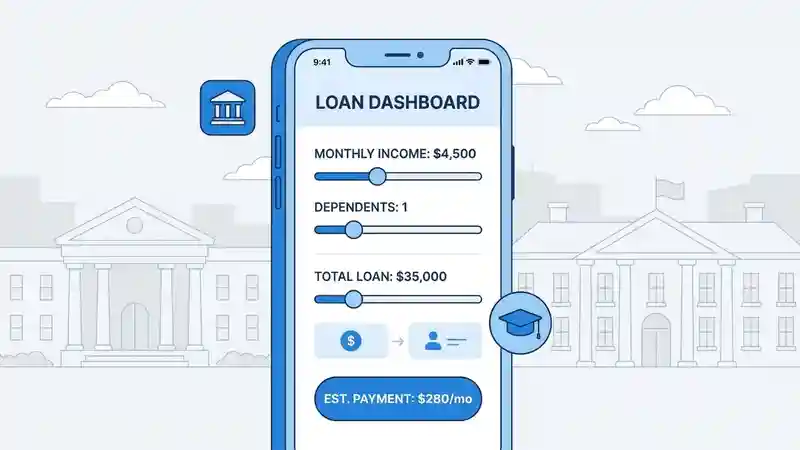
So if you’re a single person earning $50,000 a year with no kids, you’re looking at roughly $100 to $150 per month under RAP. If you have two kids, you knock $100 off that monthly figure, which helps.
Here’s a quick example of how the math shakes out for a typical borrower. Say you owe $35,000 in federal loans and you’re making $50,000 a year. Under the old SAVE plan, your payment might have been as low as $0 to $50 a month because of how it calculated discretionary income. Under RAP, your payment will likely land somewhere around $100 to $125. That’s not catastrophic, but it’s a real difference in your monthly budget — especially if you’re also dealing with rent, groceries, and everything else that keeps getting more expensive.
The silver lining? Under RAP, the possibility for negative amortization — when accrued interest outpaces how much monthly payments chip away at the loan balance — is removed. The government will subsidize any interest that isn’t covered by your monthly payment, and will provide up to $50 toward your principal as long as your payment is made on time.
Translation
your balance will never secretly balloon behind your back. That was one of the biggest fears people had with income-driven plans — you make your payments faithfully for years and somehow end up owing more than you started with. RAP fixes that.
The Part Nobody Is Talking About Enough
Here’s the thing that should make every borrower pause before jumping into RAP: once you’re in, you’re in.
Once a borrower enrolls in RAP, switching to another plan later is not permitted, making the initial choice consequential.
That’s not a small detail. That’s a 30-year commitment with no exit ramp. If your income jumps significantly in five years — say you get a promotion, start a business, or your spouse starts earning more — you can’t pivot to a plan that might cost you less overall. You’re locked in.
This is especially important for people who are early in their careers and expect their income to grow. A $50,000 salary today might feel modest, but if you’re in tech, healthcare, law, or any field with real earning potential, what feels affordable now could mean you’re overpaying later under an income-tied plan.
What About Public Service Loan Forgiveness?

Good news here, at least. RAP is the only one of the two new plans eligible for Public Service Loan Forgiveness, which still requires 10 years of qualifying payments.
So if you work for a government agency, a nonprofit, or a qualifying public service organization, RAP is still your path to forgiveness after 10 years. The Tiered Standard Plan doesn’t qualify. If PSLF is part of your plan, RAP is essentially your only real option in the new system.
Who Can’t Use RAP?
Not everyone qualifies. Parent PLUS Loans and Direct Consolidation Loans that include a Parent PLUS Loan aren’t eligible for RAP. Parent PLUS borrowers who want an income-driven option face a tighter window: because Parent PLUS loans are not eligible for RAP, parents seeking income-driven repayment generally need to consolidate before July 1, 2026, and enroll in a qualifying plan first.
If you’re a parent with PLUS loans, this is urgent. The window to consolidate and get into a qualifying plan is closing fast — we’re talking days, not months.
FFEL loans and Perkins loans are also not eligible for RAP in any form. If that’s what you have, your options are different and you should contact your loan servicer directly.
What Should You Do Right Now?
Step one: log into StudentAid.gov and find out exactly what plan you’re currently on. If you’ve been floating in SAVE forbearance, you need to know that interest is accruing and you’ll have a decision to make soon.
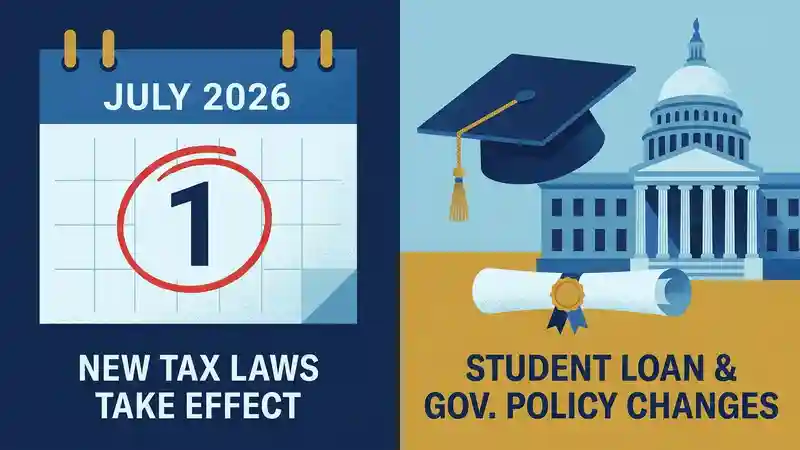
Starting July 1, 2026, borrowers will be able to access the new Repayment Assistance Plan. The application takes approximately 10 minutes to complete on Student.
Step two: run the numbers before you commit. There are RAP calculators available online — The College Investor has a good one — where you can plug in your income, dependents, and loan balance to see what your actual monthly payment would be. Compare that to what you’d pay under IBR (which is still an option for older borrowers) before making a decision.
Step three: if you’re on PAYE or ICR, don’t panic yet. Borrowers enrolled in either plan can remain enrolled until 2028. If a new plan is not selected by 2028, loan servicers will automatically move borrowers into the new RAP plan. You have time, but don’t sleep on it.
Step four: if you have Parent PLUS loans and want income-driven repayment, act now. The consolidation deadline is genuinely urgent.
The Bottom Line
RAP isn’t the worst thing that could have happened to student loan borrowers, but it’s not a straightforward upgrade either. The balance protection is genuinely valuable — knowing your debt won’t snowball is a real relief. But the 30-year forgiveness timeline, the locked-in enrollment, and the higher monthly payments for people coming off SAVE are real costs that hit real people.
The move that makes sense for you depends on your income today, your income trajectory, your family size, whether you work in public service, and how you feel about being locked into a plan for three decades. That’s a lot to weigh, and it’s worth taking the time to actually think it through instead of just clicking whatever StudentAid.gov defaults you to.
This is your money and your financial future. Get informed, run the numbers, and make the choice that fits your life — not the one the government makes for you by default.
Disclaimer
This article is for informational purposes only and does not constitute financial or legal advice. Please consult a qualified financial advisor or student loan counselor before making repayment decisions.