

Learn how to build credit from scratch in the USA with these 7 proven steps. Start your credit journey today and reach a 700+ credit score faster than you…
Starting your financial life in the USA without a credit history feels like a catch-22 — you need credit to get credit. But here’s the good news: you can build credit from scratch, even if you have zero credit history, The how to get a 700 credit score no Social Security history, or are a recent immigrant. Millions of Americans have done it, and this step-by-step guide will show you exactly how.
By the end of this article, you will know how to open your first credit account, use it responsibly, and watch your credit score climb to 700+ within 12 to 18 months.
What Is a Credit Score and Why Does It Matter?
Before we dive into the steps, let’s quickly cover what a credit score is and why it matters so much in the United States.
Your credit score is a 3-digit number ranging from 300 to 850. Lenders, landlords, employers, and even insurance companies use this number to judge how financially trustworthy you are. The higher your score, the better deals you get on loans, credit cards, apartments, and even car insurance.
Here is what the score ranges mean:
📊 What Is a Good Credit Score in the USA?
| Credit Score Range | Rating |
|---|---|
| 800 – 850 | Exceptional |
| 740 – 799 | Very Good |
| 670 – 739 ⭐ | Good (Recommended) |
| 580 – 669 | Fair |
| 300 – 579 | Poor |
💡 In the USA, a credit score of 670 or higher is generally considered good and helps you qualify for better loans, lower interest rates, and premium credit cards.
Your goal when starting from scratch is to hit at least 670 (Good) within your first year, and 740+ within two years.
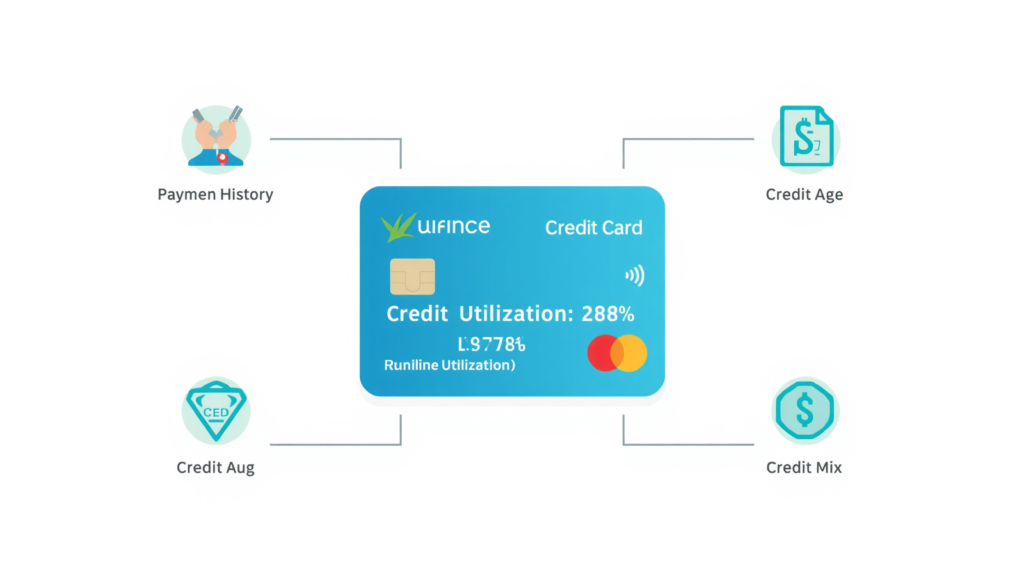
The most widely used score in the USA is the FICO Score, calculated from five factors:
- Payment history — 35%
- Credit utilization — 30%
- Length of credit history — 15%
- Credit mix — 10%
- New credit inquiries — 10%
Knowing these five factors tells you exactly what habits you need to build. Let’s get into the steps.
7 Proven Steps to Build Credit From Scratch
✅ Step 1: Check If You Already Have Any Credit History
Before you assume you have zero credit, check first. Sometimes utility payments, rent, or old accounts have been reported to the bureaus.
Visit AnnualCreditReport.com — the only federally authorized free site — and pull your reports from all three bureaus: Equifax, Experian, and TransUnion. This check is completely free and will not hurt your score.
If you already have a thin file (1–2 accounts), you are ahead of the game. If you see errors, dispute them immediately because incorrect negative information can tank a score you haven’t even built yet.
✅ Step 2: Open a Secured Credit Card
A secured credit card is the single fastest way to build credit from scratch. It works like this: you deposit a small amount of cash (usually $200–$500) as collateral, and that amount becomes your credit limit. The card issuer reports your payment activity to all three credit bureaus every month, which builds your score.
Top secured credit cards in 2025:
- Discover it® Secured — No annual fee, cash back rewards, automatic upgrade to unsecured after 7 months
- Capital One Platinum Secured — Low deposit requirement, reports to all 3 bureaus
- Chime Credit Builder — No credit check required, no annual fee, no minimum deposit
The golden rule: Use the card for small everyday purchases like gas or groceries, then pay the full balance before the due date. Never carry a balance and never miss a payment.

✅ Step 3: Become an Authorized User on Someone Else’s Account
This is one of the fastest credit-building hacks that most people don’t know about. If a family member or close friend has a credit card with a long, positive history, ask them to add you as an authorized user on their account.
Here is what happens: their entire account history gets added to your credit report immediately. If they have had that card for 5 years with perfect payments, you get the benefit of that 5-year history overnight — without ever having to use their card.
You do not need to actually receive a physical card or make any purchases. The history boost alone can push a starting score from 0 to 600+ very quickly.
Make sure the primary cardholder has a clean history with no late payments or high balances — a bad account hurts your score just as much as a good one helps it.
✅ Step 4: Apply for a Credit-Builder Loan
A credit-builder loan is specifically designed for people with no or bad credit. Unlike a regular loan, you do not receive the money upfront. Instead:
- The lender holds the loan amount (typically $300–$1,000) in a savings account
- You make fixed monthly payments for 6 to 24 months
- At the end, you receive the full amount plus any interest earned
- Every on-time payment is reported to the credit bureaus
Banks, credit unions, and online lenders like Self (formerly Self Lender) and CreditStrong offer these products specifically for credit building. The average credit-builder loan costs $25–$50 per month and can add 40–60 points to your score within a year.
✅ Step 5: Keep Your Credit Utilization Below 30%
Credit utilization is the percentage of your available credit that you are currently using. It accounts for 30% of your FICO score, making it one of the most powerful levers you can control.
The formula is simple:
Credit Utilization = (Balance ÷ Credit Limit) × 100
If your secured card has a $500 limit and you carry a $200 balance, your utilization is 40% — which is too high.
Best practices:
- Keep utilization below 30% at all times (below 10% is ideal for maximum points)
- Pay your bill multiple times per month if needed to keep the balance low
- Request a credit limit increase after 6 months of on-time payments (this automatically lowers your utilization rate without spending more)
✅ Step 6: Always Pay On Time — Every Single Time
Payment history is the single biggest factor in your credit score at 35%. One missed payment can drop your score by 50–100 points and stays on your credit report for 7 years.
Here is how to never miss a payment:
- Set up autopay for at least the minimum payment on every account.
- Set a phone reminder 5 days before each due date.
- Use a budgeting app like Mint or YNAB to track all payment dates in one place.
- If you cannot afford the full balance, always pay at least the minimum — even $25 is better than $0
If you do miss a payment by accident, call your card issuer immediately. Many will waive the late fee on a first offense and may not report it to the bureaus if you pay within a few days.
✅ Step 7: Be Patient and Keep Monitoring Your Score
Building credit from scratch takes time — that is just the reality. But if you follow the steps above consistently, here is a realistic timeline for what to expect:
📈 Credit Score Growth Timeline (USA)
| Timeframe | Expected Score Range |
|---|---|
| Month 1–3 | Score appears (580–620) |
| Month 3–6 | 620–650 with consistent payments |
| Month 6–12 | 650–700 with low utilization |
| Month 12–18 🚀 | 700+ with multiple positive accounts |
💡 Most people in the USA can reach a 700+ credit score within 12–18 months by paying bills on time, keeping credit utilization low, and building multiple positive accounts.
Free tools to track your credit score:
- Credit Karma — Free, updates weekly, shows Equifax and TransUnion scores.
- Experian free membership — Shows your FICO Score monthly.
- Mint — Tracks score alongside your full budget.
- Discover Credit Scorecard — Free FICO score, open to non-Discover cardholders
Common Credit-Building Mistakes to Avoid
Even with good intentions, beginners make these expensive mistakes:
❌ Applying for too many cards at once — Each application triggers a hard inquiry that drops your score 5–10 points. Space out applications by at least 6 months.
❌ Closing your first credit card — Even if you get a better card later, keep your first card open. Closing it shortens your credit history and hurts your score.
❌ Only making minimum payments — Carrying a balance means paying interest and keeping your utilization high. Always pay in full when possible.
❌ Ignoring your credit report — Errors are common. The FTC reports that 1 in 5 Americans has an error on their credit report. Check yours at least twice a year.
❌ Co-signing loans — If the other person misses payments, you are equally responsible and your credit takes the hit.
Frequently Asked Questions
Q: How long does it take to build credit from scratch? A: You can get your first credit score in as little as 1–3 months after opening your first account. A good score (670+) typically takes 12–18 months of responsible use.
Q: Can I build credit without a credit card? A: Yes. Credit-builder loans, rent reporting services like Rental Kharma or LevelCredit, and being added as an authorized user are all card-free ways to build credit.
Q: What credit score do I need to rent an apartment in the USA? A: Most landlords look for a score of at least 620–650. In competitive markets like New York or San Francisco, 700+ is often preferred.
Q: Will checking my own credit score hurt it? A: No. Checking your own score is a “soft inquiry” and has zero impact on your score. Only hard inquiries (from lenders when you apply for credit) can lower your score.
Final Thoughts
Building credit from scratch in the USA is completely achievable — it just requires consistency, patience, and a few smart moves. Start with a secured credit card or credit-builder loan, keep your utilization low, and never miss a payment. Within 12 to 18 months, you will have a solid credit history that unlocks better interest rates, more apartment options, and greater financial freedom.
The most important step? Start today. Every month you wait is a month of credit history you are not building.

Keep Exploring Smart Money Tips
Want to go further? These expert guides will help you level up your finances:















1 thought on “How to Build Credit From Scratch in 2026 (Step-by-Step Guide)”