Meta stock crashed almost 10% despite strong revenue. Read the full Meta stock earnings report analysis and what it means for investors.
I’ll be honest — when I first saw the headline that Meta beat revenue expectations and the stock still dropped almost 10% after hours, my first reaction was, “wait, that doesn’t add up.” If you’ve felt the same confusion scrolling through your feed today, you’re not alone. Numbers on a press release rarely tell the full story, and this quarter’s meta stock earnings report is a perfect example of why context matters more than the headline.
So let’s slow down and actually walk through what happened, why the market reacted the way it did, and what it might mean if you’re someone who watches META stock — whether you’re a long-term investor, a day trader, or just someone trying to understand why your feed is suddenly full of finance bros arguing about capex.
The Headline Numbers From This Quarter
Let’s start with what actually got reported, because this is where a lot of confusion begins.
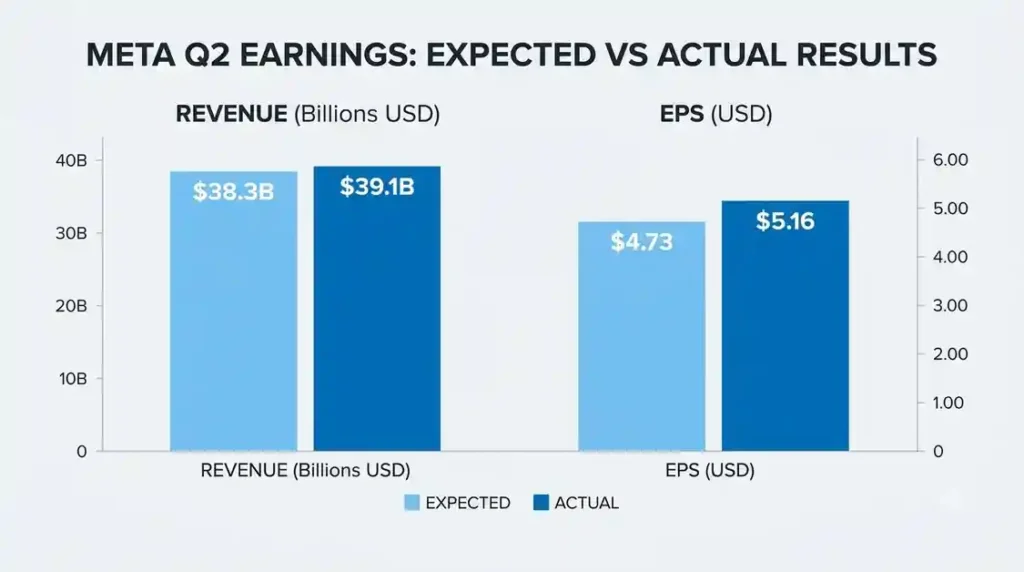
Meta posted revenue of $60.8 billion for the quarter, which is a 28% jump from the same period last year. That’s genuinely strong growth, and on paper, it beat what analysts on Wall Street were expecting. So far, that sounds like good news.
But here’s where it gets interesting: earnings per share came in at $6.18, missing the roughly $7.17 that analysts had penciled in. That’s a meaningful miss — not a small rounding error. And net income actually fell about 14% year-over-year, landing around $15.85 billion.
So you had a company growing its top line at a fast clip, but its bottom line shrinking. That mismatch is exactly the kind of thing that makes traders nervous, and it’s a big reason the stock reacted the way it did.
Why a Revenue Beat Didn’t Save the Stock
I’ve noticed a pattern over the years covering earnings season — markets don’t just react to whether a company beat or missed. They react to the story behind the numbers. In this case, total expenses jumped 55% year-over-year, landing around $42 billion for the quarter. That’s expenses growing almost twice as fast as revenue.
When costs outpace sales growth like that, it eats directly into margins. Meta’s operating margin dropped to 31%, down from 43% a year earlier. That’s a steep decline, and it tells investors that profitability is under real pressure right now, even with the business technically growing.
Why Meta Stock Dropped Nearly 10% After Hours
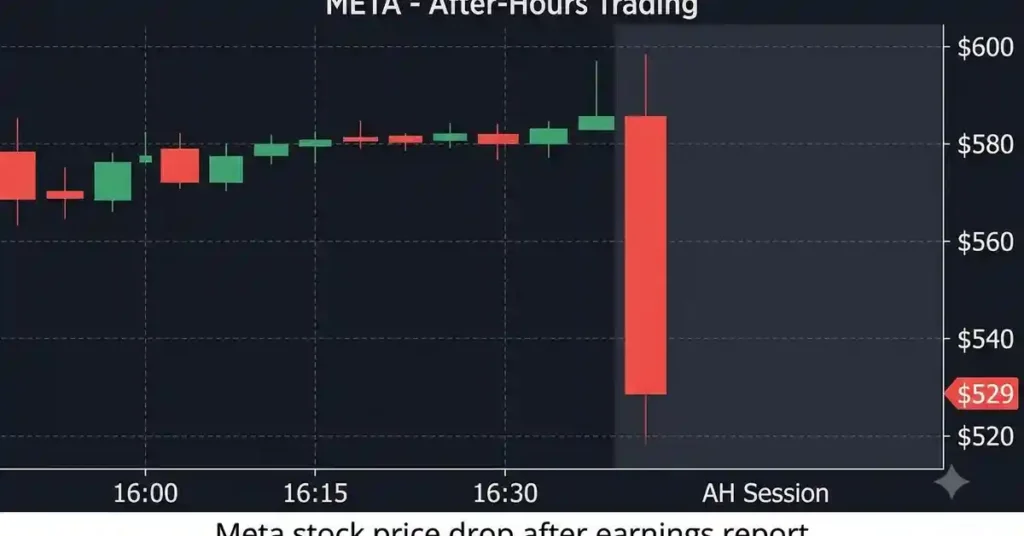
This is probably the part most people searching for a meta stock earnings report actually want answered. Shares fell close to 9.6% in after-hours trading, sliding from a closing price near $585 down to roughly $529.
A few things stacked up here at once:
- The EPS miss caught a lot of analysts off guard, since expectations were sitting close to $7.17 per share.
- Rising costs signaled that near-term profitability could stay squeezed for a while.
- Heavy ongoing spending on AI infrastructure raised questions about how long this investment phase will last before it pays off.
None of these are necessarily red flags on their own — but together, they gave investors a reason to sell first and ask questions later, which is honestly pretty typical behavior after a big earnings release.
The $2.4 Billion Legal Charge Nobody Was Talking About
Here’s something that got buried under all the stock-price drama: Meta took on a $2.4 billion legal charge this quarter, along with severance costs tied to a headcount reduction back in May. Combined, these one-time costs took a real bite out of net income.
If you strip these charges out, the underlying business likely looks a lot healthier than the headline numbers suggest. But markets tend to react fast and dig into the details later, and that’s part of why the initial sell-off looked more dramatic than the full picture might justify.
What This Legal Charge Actually Covers
Without getting into speculation, it’s worth noting that legal charges like this are usually tied to ongoing litigation, regulatory settlements, or compliance-related costs — not necessarily a sign that the core advertising business is struggling. It’s a one-time hit, not a recurring drag on future quarters, though investors will be watching future filings closely to confirm that.
Where All the Money Is Going — AI Spending and Capex
If there’s one theme connecting nearly every big tech earnings report this year, it’s AI spending, and Meta is no exception. The company’s 2026 capital expenditure guidance sits between roughly $130 billion and $145 billion, almost entirely tied to data centers and AI infrastructure.
Just a day before this earnings report, Meta also announced a $14 billion data center venture in El Paso, Texas, in partnership with BlackRock — with BlackRock funds owning the majority stake. That structure is worth paying attention to, because it’s a way for Meta to keep building aggressively without piling all the financial risk directly onto its own balance sheet.
This kind of spending is a bet on the future. Leadership has been fairly open about the vision here — the idea that widely distributed AI tools benefit society more broadly, rather than concentrating power among a handful of companies. Whether or not you agree with that framing, it’s clear the company is willing to spend heavily to get there.

What Analysts and Traders Are Saying
Heading into this earnings report, prediction markets showed around 84% of traders expecting Meta to beat expectations — and on revenue, it technically did. The EPS miss, though, wasn’t something most people had priced in, which explains part of the sharp reaction.
Looking ahead, Meta guided next quarter’s revenue to a range of $61 billion to $64 billion, which still implies strong growth in the high-20% range year-over-year. That guidance matters a lot here — it tells you that management still believes the core advertising engine is running well, even while AI spending ramps up in the background.
Should You Be Watching Meta Stock Right Now?
I want to be upfront here: this isn’t financial advice, and I’m not going to pretend I can tell you whether META is a buy, hold, or sell for your specific situation. What I can do is lay out both sides so you can make sense of it yourself.
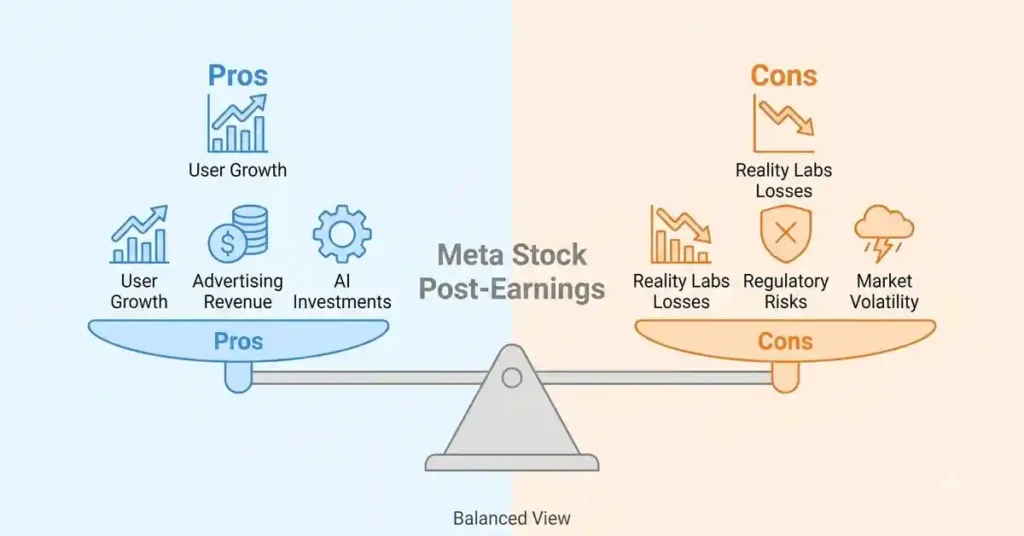
On the positive side:
- Advertising revenue remains strong, and daily active users hit 3.6 billion in June, up 3% year-over-year.
- The core business is clearly healthy and still growing at a solid pace.
- Forward guidance suggests continued strong revenue growth next quarter.
On the cautious side:
- Costs are rising much faster than revenue, which is compressing margins.
- The AI spending cycle shows no signs of slowing down anytime soon.
- One-time charges, like this quarter’s legal costs, add short-term unpredictability to earnings.
If you’re holding META or thinking about it, this is exactly the kind of moment where it’s worth talking to a financial advisor or doing your own deeper research rather than reacting purely to a single earnings report or a stock price swing.
Frequently Asked Questions
Why did Meta stock drop even though revenue beat expectations? Because earnings per share missed estimates, and total expenses grew much faster than revenue, which compressed profit margins and raised concerns about near-term profitability.
What was Meta’s actual earnings per share this quarter? Meta reported EPS of $6.18, below the roughly $7.17 that analysts were expecting.
What is the $2.4 billion legal charge related to? It was a one-time charge that, along with severance costs from a May headcount reduction, weighed on net income this quarter without necessarily reflecting the health of the core business.
How much is Meta spending on AI infrastructure? The company’s 2026 capital expenditure guidance is between roughly $130 billion and $145 billion, largely directed toward AI and data center buildout.
Is Meta stock a good buy after this earnings report? That depends on your own investment goals and risk tolerance. The core advertising business remains strong, but rising costs and heavy AI spending are real factors to weigh. It’s worth consulting a financial advisor before making any decision.