Is a credit card annual fee worth it? Paying $95–$695/year for a credit card? Find out if it’s truly worth it — with real US math, examples, and expert tips to maximize your rewards.
Here’s a number that should stop you cold: Americans are collectively carrying over $1.17 trillion in credit card debt right now. That’s not a typo. One point one seven trillion dollars. And yet, millions of those same Americans are voluntarily paying an extra $95, $395, even $695 a year just to hold a credit card.
Sounds insane, right?
But here’s the twist — for the right person, that annual fee isn’t a cost. It’s an investment. The question is whether you are that right person. And the answer isn’t in the card’s marketing brochure. It’s in your spending habits, your lifestyle, and a little bit of honest math.
Let’s break it all down.
Quick Answer: Is a Credit Card Annual Fee Worth It?
A credit card annual fee is worth it when the total value of rewards, travel credits, and perks you actually use is greater than the fee itself. For frequent travelers spending $15,000+ per year on a card, a $95–$795 annual fee card can easily return $500–$1,500 in real value. For casual spenders who carry a balance, a no-fee card is almost always the smarter choice.
The Big Picture: Credit Card Debt 1 Trillion and What It Means for You
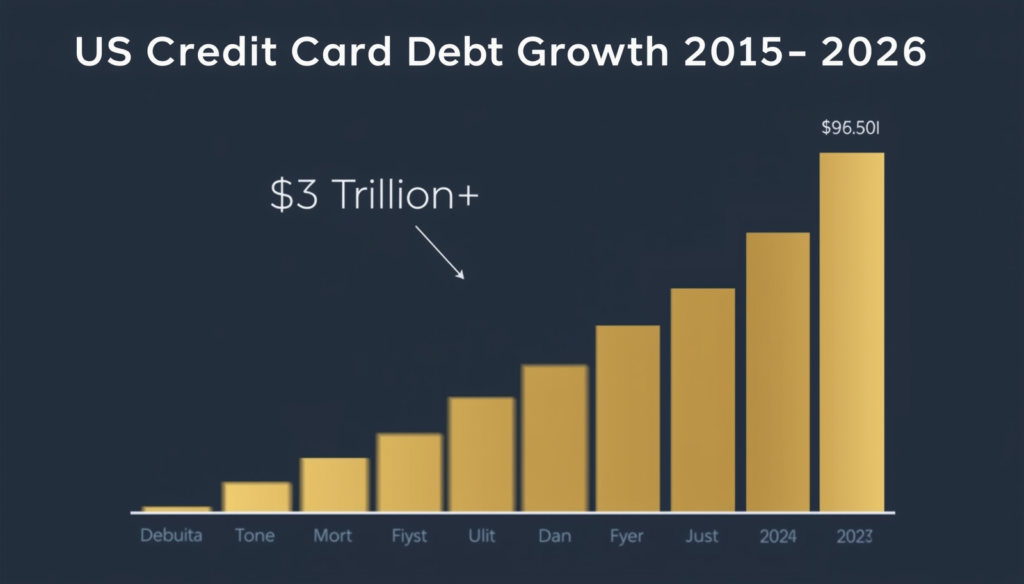
Let’s set the scene. According to the Federal Reserve, US credit card balances crossed $1 trillion in 2023 and haven’t looked back. By late 2024, that number had climbed to around $1.17 trillion — with the average American carrying a balance of roughly $6,618.
Meanwhile, Wallet Hub’s analysis of Federal Reserve data shows Americans paid a staggering $253 billion in credit card interest and fees in 2025 alone. The average APR as of May 2026? 22.12%.
Now here’s where annual fees fit in. According to the CFPB, annual fee charges tripled from $3 billion in 2015 to $8.7 billion in 2024. Fewer people are paying them — but those who do are paying a lot more. The average annual fee for cards that charge one is now $178, with the median sitting at $95.
So the country is drowning in credit card debt, fees are climbing, and interest rates are near historic highs. In this environment, choosing the right card — and deciding whether a fee is justified — has never mattered more.
From 2015 to 2024, the average annual fee more than doubled from $62 to $127. Yet the total number of people paying annual fees actually decreased by 2.4%. Fewer people are paying — but those who do are going all-in on premium cards.
What Are You Actually Paying For?
Before you decide if an annual fee is worth it, you need to know what’s on the other side of that payment. Premium cards bundle perks that — if you use them — can easily be worth multiples of what you paid.
Here’s what most annual-fee cards offer:
- Travel credits ($100–$300/year toward flights, hotels, or Ride shares)
- Airport lounge access (Centurion, Priority Pass — worth $50–$75 per visit in food and drinks you’d spend anyway)
- Accelerated rewards (3x–5x points on travel, dining, groceries)
- Global Entry or TSA PreCheck credit (up to $120 every 4–5 years)
- Trip delay, cancellation, and baggage insurance (can save hundreds in a single incident)
- Purchase protection and extended warranties
- Hotel elite status or complimentary night certificates
- Statement credits for streaming, dining, gym memberships, or Ride shares
The keyword in all of that? “If you use them.”
A card that hands you $1,400 in potential value is worthless if you’re only redeeming $200 of it. And that’s exactly the trap most people fall into.

Real-Life US Example: Sarah vs. Mike
Sarah — The Annual Fee Winner
Sarah lives in Atlanta. She travels for work about 8 times a year and flies a couple of domestic routes per month. She holds the Chase Sapphire Reserve (annual fee: $795 after the 2025 refresh).
Here’s her annual math:
- $300 travel credit used every January on a Delta flight → saves $300
- Global Entry credit ($120 every 4 years) → worth ~$30/year
- Airport lounge visits (10 per year × ~$50 in food/drinks she’d buy anyway) → $500 in savings
- Points on travel spending (4x on flights, 8x through Chase Travel) → ~$400 in trip redemptions
- Trip delay insurance covered her one canceled-flight Chicago hotel stay → $250 in real savings
Sarah’s total annual value: ~$1,480 Her annual fee: $795 She’s ahead by $685 — before touching the sign-up bonus.
Mike — The Annual Fee Mistake
Mike lives in suburban Ohio. He travels once a year for a family vacation to Florida. He got the same Sapphire Reserve because his coworker raved about it.
Mike’s reality:
- He forgot to use the travel credit portal — it expired unused
- He used the airport lounge once during a layover
- He carries a $2,500 balance month-to-month at 22% APR
- His rewards are being eaten alive by ~$45/month in interest charges
Mike’s total annual value: ~$320 His annual fee: $795 He’s down $475 on the year — plus $540 in interest.
How to Calculate If an Annual Fee Is Worth It
This is the framework. Run this before you apply for any card with a fee — or before you renew one.
Step 1: List every benefit the card offers. Don’t skip the small ones like DoorDash credits or Equinox gym perks.
Step 2: Circle only the ones you’ll realistically use. Be brutally honest. If you live in a city with no Equinox gym, that perk is worth $0 to you.
Step 3: Assign a dollar value to each benefit you’ll use. Travel credits = face value. Lounge access = what you’d spend on airport food and drinks anyway.
Step 4: Estimate your annual rewards earnings. Take your typical monthly spending by category, multiply by the card’s rewards rate, then convert points to cash value (use 1 cent per point as a conservative baseline).
Step 5: Add it all up and compare to the fee.
The Formula:
(Travel Credits Used) + (Lounge Savings) + (Rewards Earned) + (Insurance Value) = Total Annual Value If Total Annual Value > Annual Fee → It’s worth it. If Annual Fee > Total Annual Value → Downgrade or cancel.
Step 6 (Critical): Factor in your balance habit. If you carry a balance month to month, the interest you’re paying almost certainly wipes out every dollar of rewards you earn. In that case, a 0% APR no-fee card will save you far more money than any rewards card.
Which Cards Are Worth Their Fees in 2026?
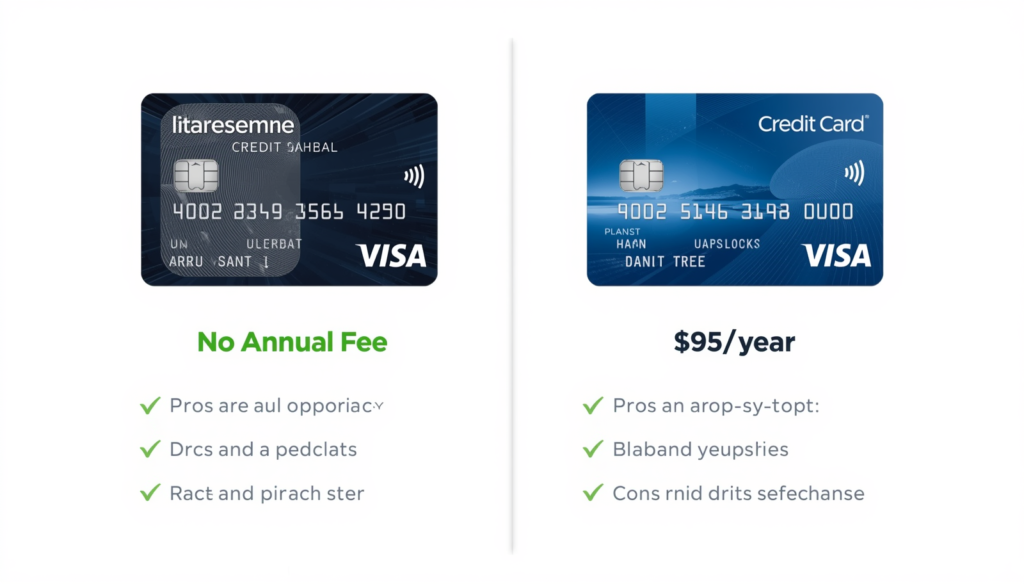
Entry-Level ($95/year) — Works for Most Moderate Spenders
- Chase Sapphire Preferred ($95): 5x on travel through Chase, 3x on dining, solid trip protections. Great starter travel card.
- Capital One Venture Rewards ($95): Simple 2x miles on everything. Easy to understand, easy to redeem.
- American Express Gold ($325): Higher fee but $240/year in dining credits (Grubhub, Uber Eats, select restaurants) + $100 airline fee credit. If you eat out regularly, the math works.
Premium Tier ($395–$795/year) — Best for Heavy Travelers
- Capital One Venture X ($395): Underrated gem. $300 travel credit through C1 Travel, 10,000 anniversary miles, Priority Pass lounge access. Clean, simple value.
- Amex Platinum ($695): 5x on flights booked direct, Centurion Lounge access, $200 airline fee credit, $200 hotel credit, Global Entry credit. Works for frequent flyers who use every piece.
- Chase Sapphire Reserve ($795): Best-in-class for road warriors who will use the $300 travel credit, lounge access, and premium trip protections every year.
Ultra-Premium ($695+) — Power Users Only
- Robinhood Platinum ($695, launched early 2026): 99.9% pure platinum card. $250 DoorDash credits, Amazon One Medical membership. New challenger worth watching.
- Citi Strata Elite ($695): Strong travel earning, still building its reputation after a rough launch in 2025.
📌 Worth remembering: 81% of American credit card users still choose no-fee cards, according to Federal Reserve data. Cards like the Wells Fargo Active Cash (2% on everything), Citi Double Cash (2% cash back), and Discover it (5% rotating categories) offer excellent value at zero cost. Don’t let premium card marketing bully you into a fee you don’t need.
Pro Tips to Maximize (or Avoid) Annual Fees
- Use every benefit, every year. Set calendar reminders for monthly credits. A $20/month Uber credit that goes unused 6 months = $120 of your own money wasted.
- Call and ask for a retention offer before paying the fee. Issuers often offer bonus points or a partial fee waiver to keep you. Ask every single year — it works more often than you think.
- Downgrade instead of canceling. Canceling a card hurts your credit utilization ratio and shortens your average account age — both hurt your FICO score. Move to the no-fee version of the same card instead.
- Stack cards strategically. A $95 travel card + a no-fee 2% cash back card often outperforms a single $695 premium card if you’re not maximizing every premium perk.
- Never carry a balance on a rewards card. At 22% APR, one month of interest on a $2,000 balance ($37) almost completely wipes out a full month of 2x rewards earned on $2,000 of spending. The math just doesn’t work.
Common Mistakes That Make Annual Fees Not Worth It
- Getting a card for the sign-up bonus and ignoring ongoing value. The bonus is one-time. The fee hits every year. After year one, the ongoing math has to work on its own.
- Overvaluing perks you won’t realistically use. A $300 fitness credit sounds amazing — until you realize it only applies to Equinox, and there isn’t one near you.
- Choosing a card whose earning structure doesn’t match your spending. A 5x travel card is almost useless if you drive everywhere and rarely fly.
- Assuming lounge access is as good as it used to be. Capital One restricted authorized user lounge access starting February 2026. Amex is tightening Centurion Lounge guest rules in July 2026. The product may have quietly changed since you signed up.
- Carrying a balance. With credit card debt at $1 trillion nationally and APRs averaging 22%, this single habit can turn a value-positive card into a financial drain overnight.
Frequently Asked Questions

Q: Is a $95 annual fee credit card worth it? A: For most moderate spenders, yes. A $95/year card with 3x on dining and travel can return $200–$400 in rewards annually if you spend $10,000–$15,000/year on the card. Add in trip protections and the math usually works in your favor.
Q: Can I get a credit card annual fee waived? A: Sometimes. Active military members get fees waived on most major cards under the Servicemembers Civil Relief Act (SCRA). Other cardholders can call and ask for a retention bonus or fee waiver — it works more often than you’d expect, especially if you’ve been a loyal customer.
Q: Should I cancel a credit card with an annual fee I’m not using? A: Don’t cancel — downgrade. Canceling a card reduces your available credit (raising your utilization ratio) and shortens your average account age. Both hurt your FICO score. Call and ask to be moved to the no-fee version of the same card instead.
Q: Does paying an annual fee help my credit score? A: No. Your credit score doesn’t factor in whether you pay an annual fee. What matters is whether you keep the account open (for account age and credit utilization), pay on time, and keep your balance low.
Q: Is the Amex Platinum worth $695 in 2026? A: For frequent travelers who maximize the $200 airline fee credit, $200 hotel credit, Global Entry reimbursement, and visit a Centurion Lounge 4–5 times per year, yes — the value often exceeds $1,000. For occasional travelers, the math usually doesn’t hold up.
Q: What’s the best no-fee credit card in 2026? A: The Wells Fargo Active Cash (2% on everything), Citi Double Cash (2% cash back), and Discover it (5% rotating categories + cash back match in year one) consistently top the no-fee category in 2026.
Q: How does credit card debt of $1 trillion affect average Americans? A: It means millions of households are paying hundreds of dollars per year in interest alone. At a 22% average APR, someone carrying a $5,000 balance pays over $1,100 in interest annually — money that could otherwise go toward savings, investments, or actually useful rewards.
More Read